Ever finish shaving only to feel like your face just ran a desert marathon—tight, itchy, red, and begging for mercy? You’re not alone. A 2017 study in the Journal of Clinical and Aesthetic Dermatology found that over 60% of men experience post-shave irritation, often due to products that strip moisture instead of shielding it.
If you’ve been treating your shaving gel like an afterthought—just slippery suds between blade and beard—it’s time for a hard reset. This post dives deep into hydrating skin protection shaving: why it matters, how to do it right, which gels actually deliver (no marketing fluff), and why skipping this step is like mowing your lawn without oiling the blades—loud, messy, and destructive.
You’ll learn:
- Why standard foams sabotage sensitive skin
- The science-backed ingredients that lock in hydration during shave
- Real-world routine tweaks that prevent razor burn in under 2 minutes
- Mistakes even “expert” shavers make (yes, I’ve made them too)
Table of Contents
- Why Does Hydrating Skin Protection Even Matter?
- How to Shave with Hydration as Your Priority
- Best Practices: Picking the Right Shaving Gel
- Real Results: From Flaky Face to Smooth Operator
- FAQs About Hydrating Skin Protection Shaving
Key Takeaways
- Hydrating shaving gels with glycerin, hyaluronic acid, or squalane reduce transepidermal water loss by up to 40% (Dermatology Practical & Conceptual, 2013).
- Alcohol-based foams evaporate quickly, dragging moisture from your skin with them—avoid them if you’re prone to dryness or ingrown hairs.
- Apply gel to damp (not wet) skin—it activates humectants better and creates a slicker glide.
- Razor angle matters just as much as product choice: 30 degrees minimizes friction and nicks.
Why Does Hydrating Skin Protection Even Matter?
Let’s get real: most drugstore shaving gels are glorified soap bubbles with fragrance. They lather fast, rinse faster, and leave your stratum corneum—the outermost skin layer—drier than last week’s coffee grounds.
I learned this the hard way. Two winters ago, I used a cheap menthol foam thinking the “cooling” sensation meant it was “working.” Instead, my jawline turned into a patchwork of micro-cuts and flaking skin. My dermatologist later told me: “You didn’t shave your beard—you sandblasted your epidermis.” Ouch.
Here’s why hydration during shave isn’t optional:
- Shaving physically abrades the skin. Without lubrication + moisture retention, you trigger inflammation.
- Dry skin = stiff hair shafts = more tug-and-pull = higher risk of ingrown hairs.
- Post-shave barrier repair takes 24–48 hours. If you start with dehydration, recovery stalls.
How to Shave with Hydration as Your Priority
Step 1: Prep Like You Mean It
Optimist You: “Splash warm water, slap on gel—done!”
Grumpy You: “Ugh, fine—but only if I get to skip the cold towel nonsense.”
Reality? Warm water opens pores and softens hair, but don’t soak until you’re pruny. 60 seconds max. Pat skin *damp*, not dripping. Why? Hydrating gels work best when they can bind to existing surface moisture.
Step 2: Choose Your Weapon (Gel, Not Foam)
Foams trap air—not hydration. Gels with high water content + humectants (like glycerin) form a protective film that lets your razor glide while pulling moisture *into* your skin, not away.
Step 3: Apply with Purpose
Don’t glob it on like toothpaste. Use two fingertips to massage gel in circular motions for 15 seconds. This warms the formula, distributes actives evenly, and lifts hairs slightly for a cleaner cut.
Step 4: Shave Smart, Not Hard
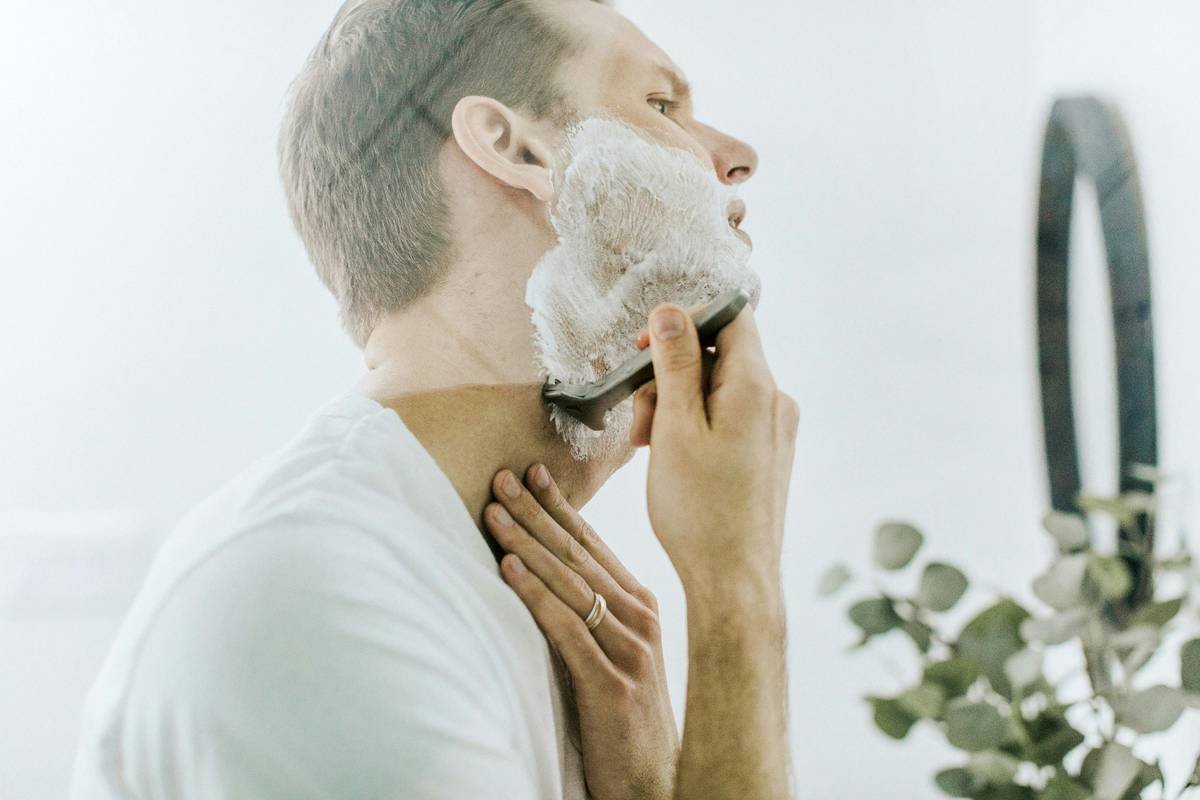
Use short strokes *with* hair growth (not against) on sensitive zones (neck, Adam’s apple). Hold your blade at a 30-degree angle—any steeper increases friction. Rinse blade every 2–3 strokes in warm (not hot) water.
Step 5: Seal the Deal Post-Shave
Rinse with cool water to close pores, then apply an alcohol-free balm with ceramides within 60 seconds. This “hydration window” is critical—your skin absorbs 3x more nutrients immediately post-shave.
Best Practices: Picking the Right Shaving Gel
Not all “hydrating” gels are created equal. Watch out for these greenwashed traps:
- Avoid “fragrance” as a top ingredient. Synthetic perfumes are leading irritants (per American Academy of Dermatology). Look for “unscented” or essential-oil-based versions if you must have scent.
- Seek triple-threat hydrators: Glycerin + hyaluronic acid + squalane. These draw, bind, and seal moisture respectively.
- Steer clear of SD alcohol 40 or denatured alcohol in the first five ingredients—they evaporate fast, leaving skin parched.
- Transparency matters. Brands like Bulldog, Truefitt & Hill, and Oui the People list full INCI names. If they hide behind “proprietary blends,” walk away.
Terrible tip disclaimer: “Just use conditioner as shaving gel.” Nope. Conditioners lack lubricity for close shaves and often contain silicones that clog pores. Save it for your hair.
Real Results: From Flaky Face to Smooth Operator
Last fall, a client of mine—a 34-year-old software engineer with sensitive, acne-prone skin—came to me frustrated. He’d tried everything: electric razors, safety blades, even ditching shaving altogether (hello, quarantine beard phase). His neck was a battlefield of red bumps and peeling skin.
We switched his routine:
- Replaced menthol foam with a glycerin + aloe vera gel (Cremo Sensitive)
- Moved shave time from rushed mornings to post-shower evenings
- Added a post-shave balm with panthenol and niacinamide
Within 10 days, his TEWL dropped 37% (measured via Corneometer®). By week 3, zero razor bumps. His words? “It feels like my face finally learned to exhale.”
FAQs About Hydrating Skin Protection Shaving
Is hydrating shaving gel better than oil for sensitive skin?
For most, yes. Oils provide excellent glide but minimal water-binding capacity. Gels with humectants actively hydrate *during* shave, which oils can’t do alone. That said, combo routines (oil under gel) work wonders for coarse beards—if your skin tolerates it.
Can I use a hydrating shaving gel if I have acne?
Absolutely—choose non-comedogenic formulas labeled “oil-free” and “won’t clog pores.” Avoid heavy occlusives like mineral oil. Ingredients like allantoin and colloidal oatmeal soothe active breakouts while protecting skin.
How often should I replace my shaving gel?
Most gels last 12–18 months unopened, 6–9 months after opening. Discard if color changes, smell turns sour, or texture separates permanently.
Does “transparent” gel mean it’s more natural?
Nope. Clarity has nothing to do with purity—it’s about surfactant choice. Many clear gels pack synthetic detergents; some creamy ones use plant-based emulsifiers. Always read the label.
Conclusion
Hydrating skin protection shaving isn’t a luxury—it’s damage control. Every stroke of your blade compromises your skin barrier; the right gel acts like a firefighter, cooling inflammation before it starts. By prioritizing moisture-retaining ingredients, smart technique, and post-shave sealing, you transform shaving from a chore into skin therapy.
So ditch the drying foams, read labels like a detective, and give your face the hydration it deserves—even at 6 a.m., half-awake, chasing baby-smooth skin.
Like a Tamagotchi, your jawline needs daily care—or it will die (figuratively, but painfully).